 5 Strength Moves Every Murph Athlete Should Master
Murph isn’t just a workout — it’s a battlefield test of strength, endurance, and mental toughness.
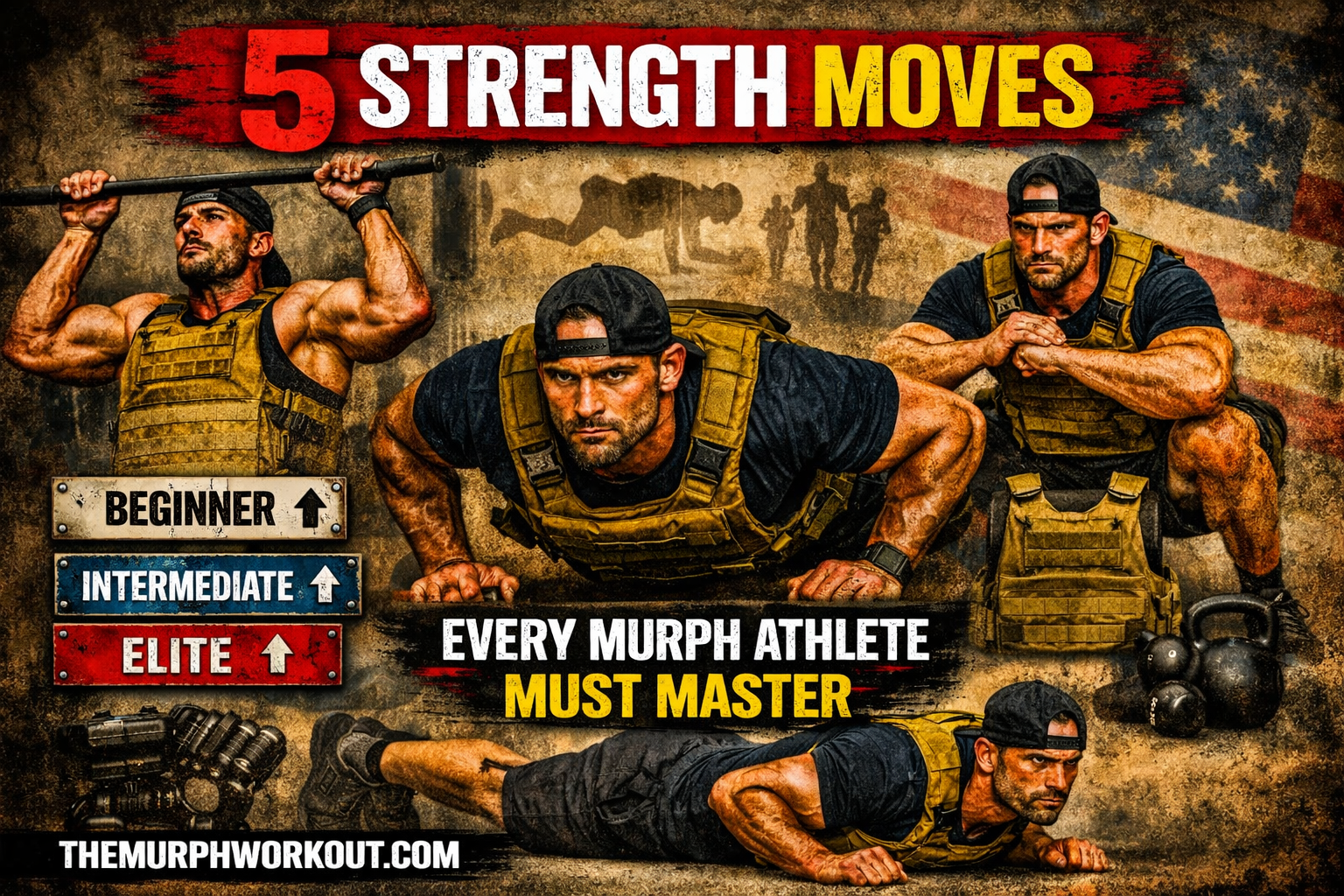
To crush 100 pull‑ups, 200 push‑ups, and 300 squats (plus two miles of running), you need more than grit — you need functional strength that lasts. Here are 5 Strength Moves Every Murph Athlete Should Master
These five strength moves are the foundation every Murph athlete should master. They build power, stability, and resilience so you can perform at your best — from rep one to rep 600.
1. Pull‑Ups: The Cornerstone of Upper‑Body Strength
Pull‑ups are the ultimate test of relative strength — your ability to move your own bodyweight.
In Murph, they’re the first movement and often the first wall athletes hit.
Why they matter:
Pull‑ups build back, shoulder, and grip strength — essential for maintaining posture and power throughout the workout.
Progression plan:
- Beginner: Banded pull‑ups or ring rows (3×10)
- Intermediate: Strict pull‑ups (5×5)
- Advanced: Weighted pull‑ups (4×6)
Pro tip: Focus on full range of motion — chin over bar, arms fully extended at the bottom. Controlled reps build endurance and prevent shoulder fatigue later in the workout.
2. Push‑Ups: The Engine of Endurance
Two hundred push‑ups test not just your chest and triceps, but your mental stamina.
When fatigue sets in, form breaks down — hips sag, elbows flare, and reps slow.
Why they matter:
Push‑ups develop pressing strength, core stability, and muscular endurance. They’re the glue between upper‑body power and total‑body control.
Progression plan:
- Beginner: Knee or incline push‑ups (4×15)
- Intermediate: Standard push‑ups (5×20)
- Advanced: Plyometric or weighted vest push‑ups (4×25)
Pro tip: Keep your body in a straight line and breathe rhythmically — exhale on the push, inhale on the descent. Efficiency beats speed when fatigue hits.
3. Air Squats: The Foundation of Murph Power
Three hundred air squats sound simple — until you hit rep 200.
Squats are where Murph athletes separate themselves from the pack.
Why they matter:
Squats build leg endurance, hip mobility, and cardiovascular efficiency. Strong legs keep your pace steady and your form clean through every round.
Progression plan:
- Beginner: 5×20 air squats (controlled tempo)
- Intermediate: 4×25 goblet squats (moderate weight)
- Advanced: 3×30 weighted vest squats
Pro tip: Maintain full depth and upright posture. Drive through your heels and keep your chest tall — it saves energy and protects your knees.
4. Planks: The Hidden Strength Behind Every Rep
Murph is a full‑body challenge, and your core is the stabilizer that holds it all together.
Without a strong core, your push‑ups sag, your pull‑ups swing, and your squats collapse.
Why they matter:
Planks build isometric strength and endurance in your abs, lower back, and shoulders — improving posture and efficiency across all movements.
Progression plan:
- Beginner: 3×30‑second planks
- Intermediate: 3×60‑second planks
- Advanced: 3×90‑second weighted planks
Pro tip: Keep your body straight from head to heels. Engage your glutes and brace your abs — imagine pulling your belly button toward your spine.
5. Running Intervals: The Forgotten Strength Move
Murph starts and ends with a mile run — and those miles can make or break your time.
Running isn’t just cardio; it’s leg strength, rhythm, and recovery in motion.
Why they matter:
Strong runners recover faster between sets and maintain pace under fatigue. Interval training builds explosive endurance that translates directly to Murph performance.
Progression plan:
- Beginner: 6×200‑meter intervals (moderate pace)
- Intermediate: 8×400‑meter intervals (fast pace)
- Advanced: 10×400‑meter intervals (weighted vest optional)
Pro tip: Focus on breathing and cadence. Keep your stride efficient — short, quick steps conserve energy for the bodyweight work ahead.
Bonus: How to Combine These Moves for Murph Mastery
To build complete Murph strength, combine these five moves into weekly training blocks.
Here’s a sample structure:
| Day | Focus | Example |
|---|---|---|
| Monday | Pull‑Ups + Planks | 5×5 pull‑ups + 3×60‑sec planks |
| Tuesday | Push‑Ups + Squats | 5×20 push‑ups + 4×25 squats |
| Wednesday | Running Intervals | 8×400‑meter sprints |
| Thursday | Mobility + Recovery | Stretch hips, shoulders, wrists |
| Friday | Murph Simulation | 10 rounds of 5‑10‑15 |
| Saturday | Active Recovery | Light jog or yoga |
| Sunday | Rest | Full recovery |
This structure builds strength, endurance, and recovery — the trifecta for elite Murph performance.
Mindset: Strength Is Earned, Not Given
Murph isn’t about brute force — it’s about discipline.
Every rep, every mile, every drop of sweat builds resilience.
Master these five moves, and you’ll not only crush Murph — you’ll redefine what strength means.
Train hard, recover smart, and remember: every rep is earned.