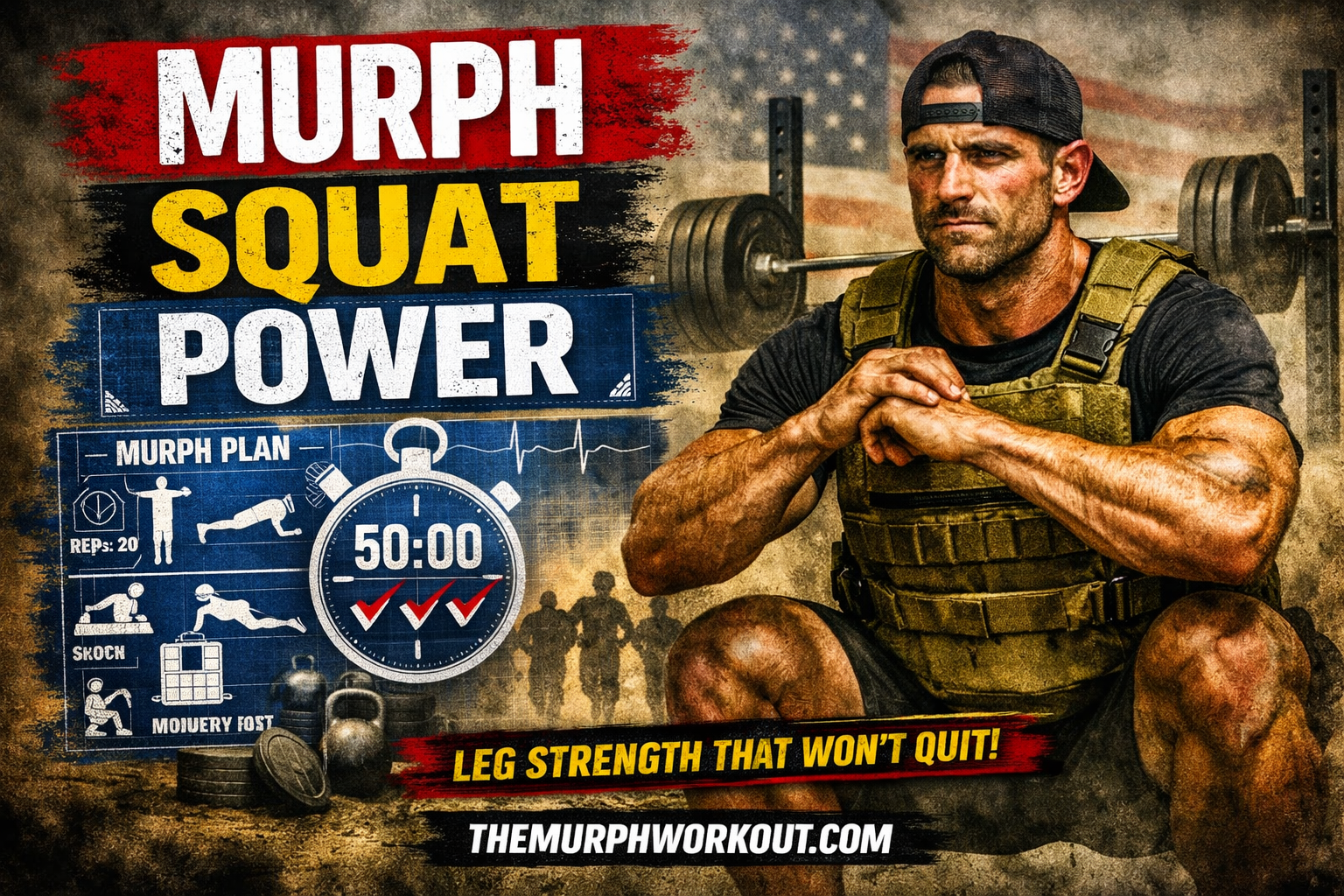
 Murph Squat Power: Build Legs That Don’t Quit at Rep 200
If you’ve ever hit rep 150 and felt your legs turn to concrete, you know the Murph squat wall is real. Two hundred air squats sound simple — until fatigue, form breakdown, and mental exhaustion hit all at once. The difference between surviving and dominating Murph comes down to leg endurance and power.
This guide gives you the blueprint to build legs that don’t quit — legs that drive through every rep with strength, control, and confidence.
Why Squat Power Matters in Murph
Murph’s 200 air squats are more than a leg workout — they’re a test of total body resilience. Strong legs stabilize your core, improve your run pace, and keep your push‑ups and pull‑ups efficient.
When your legs fatigue early, everything else collapses: your breathing, your posture, your rhythm. Building squat power ensures you maintain speed and form deep into the workout.
1. Train for Volume and Control
Murph squats are high‑rep endurance movements, not max‑strength lifts.
To prepare, train with controlled tempo squats and high‑volume sets that mimic Murph fatigue.
Workout Example:
- 5 rounds: 40 air squats (controlled pace)
- Rest 60 seconds between rounds
- Focus on full depth and upright posture
Tempo training builds muscular endurance and teaches your body to maintain form under fatigue — exactly what you need at rep 180.
2. Add Weighted Squats for Power
Bodyweight endurance is built on strength.
Incorporate weighted squats 2–3 times per week to develop power that carries over to air squats.
Workout Example:
- 4 sets of 10 back squats at moderate weight
- 3 sets of 15 goblet squats
- 3 sets of 20 walking lunges
Weighted work increases muscle fiber recruitment, giving your legs the strength to push through fatigue when the vest feels heavy and your quads are screaming.
3. Use Plyometrics to Build Explosive Endurance
Explosive movements improve speed and recovery between reps.
Add jump squats, box jumps, and broad jumps to your Murph prep.
Workout Example:
- 3 rounds:
- 10 jump squats
- 10 box jumps
- 10 broad jumps
- Rest 90 seconds
This trains your fast‑twitch fibers and boosts blood flow efficiency — helping you recover faster between squat sets.
4. Strengthen Your Posterior Chain
Your glutes and hamstrings are the engine behind every squat.
Weak posterior muscles lead to knee pain and early fatigue.
Include accessory work:
- Glute bridges (3×20)
- Romanian deadlifts (3×12)
- Step‑ups (3×15 per leg)
These movements balance your squat mechanics and prevent breakdown when fatigue sets in.
5. Build Mobility for Depth and Speed
Tight hips and ankles limit squat depth and efficiency.
Mobility work keeps your form clean and your reps fast.
Daily Mobility Routine:
- 90/90 hip rotations (2 minutes)
- Deep squat holds (2 minutes)
- Ankle dorsiflexion stretches (2 minutes)
Better mobility means smoother reps and less wasted energy — crucial when you’re chasing a sub‑50 Murph.
6. Practice Murph‑Specific Squat Sets
Simulate Murph conditions weekly.
Combine squats with push‑ups and pull‑ups to train transitions and pacing.
Workout Example:
- 10 rounds:
- 5 pull‑ups
- 10 push‑ups
- 15 squats
Track your time per round. Aim for consistency — elite Murph athletes maintain steady pacing across all 10 rounds.
7. Recover Like a Pro
Squat power isn’t built overnight — it’s built through recovery.
Your legs need rest, hydration, and nutrition to adapt.
Recovery Checklist:
- Foam roll quads and glutes daily
- Sleep 7–9 hours per night
- Eat lean protein and complex carbs
- Hydrate aggressively
Recovery ensures your legs rebuild stronger after every session.
8. Mental Toughness at Rep 200
Murph squats test your willpower as much as your muscles.
When your legs burn and your breathing spikes, focus on rhythm and mindset.
Mental cues:
- “One rep at a time.”
- “Stay tall, stay strong.”
- “Finish what you started.”
Elite Murph athletes don’t panic when fatigue hits — they breathe, reset, and keep moving.
9. Weekly Squat Power Plan
Here’s a simple weekly structure to build Murph‑ready legs:
| Day | Focus | Example |
|---|---|---|
| Monday | Strength | Weighted squats + lunges |
| Tuesday | Endurance | 5×40 air squats |
| Wednesday | Mobility | Hip & ankle drills |
| Thursday | Plyometrics | Jump squats + box jumps |
| Friday | Murph simulation | 10 rounds of 5‑10‑15 |
| Saturday | Recovery | Foam roll + walk |
| Sunday | Rest | Full recovery |
Follow this for 4–6 weeks and you’ll notice faster reps, better form, and stronger legs that power through the entire Murph.
Murph Squat Power: Final Word
Murph isn’t just about surviving 200 squats — it’s about owning them.
When your legs are strong, mobile, and conditioned, you move with confidence and finish with power.
Train smart, recover hard, and build legs that don’t quit.
Because when you hit rep 200 and still have gas left in the tank — that’s when you know you’re Murph‑ready.